
My Journey into Orthopaedic Surgery
Here follows a short, information dense story to hopefully give just a hint of an idea of where I come from and why doing orthopaedics and touching patient's lives are so important to me...
I grew up in a home where precision met compassion.
My father, a mechanical engineer, taught me the value of structure, logic, and craftsmanship. He was the kind of man who could fix anything — and he made sure I could too. From a young age, I was in the garage with him, learning how to use tools, how to problem-solve, how to think in three dimensions. I didn’t just watch — I built, I repaired, I learned. It was in those quiet, hands-on moments that I first discovered the joy of restoring what was broken.
My mother, an occupational therapist, brought a different kind of restoration into our home. She showed me what it meant to care for people — to help them regain their independence, their dignity, their ability to live fully. She taught me that healing isn’t just about fixing what’s wrong; it’s about understanding what matters most to someone and helping them get it back.
Between them, my parents gave me a blueprint: use your hands to serve others.
Sport was the other great teacher in my life. Rugby, in particular, shaped me. It taught me discipline, teamwork, resilience, and the thrill of movement. I loved the physicality of it — the way the body could be trained, tested, and trusted. But it also taught me about vulnerability. I still remember the day I fractured my scaphoid. It was a tough injury, and I was referred to a hand surgeon.
That consultation changed everything.
The surgeon didn’t just treat me — he inspired me. He spoke about the anatomy of the wrist with such clarity and passion that I was completely captivated. He wasn’t just fixing a bone; he was restoring function, restoring confidence, restoring me. I walked out of that room with more than a diagnosis. I walked out with a calling.
From that moment on, I knew I wanted to become an orthopaedic surgeon.
It wasn’t just about the science — though I loved the anatomy, the biomechanics, the logic of it all. It was about the craft. The ability to use your hands to solve problems. The satisfaction of restoring movement. The privilege of helping someone walk again, lift their child, return to work, or simply live without pain.
During internship, I didn’t get as much theatre time as I would’ve liked. But I made the most of every opportunity. I took full responsibility for orthopaedic patients in casualty. I learned to manage emergencies, perform haematoma blocks, reduce dislocations, and apply backslabs. I presented every case — sometimes to a room full of professors, registrars, and MOs — and I learned to be confident in what I knew, and humble about what I didn’t. It was a steep learning curve, but I grew into it. And I loved it.
One night, when casualty was quiet, I found myself in theatre. I watched a registrar move from one case to the next — external fixations, ORIFs, tendon repairs — and I was completely absorbed. At 5 a.m., as the team scrubbed for the day’s first case, the registrar turned to me and said:
“It’s a really tough road to orthopaedic surgery, but it’s so worth it… I guess you just need to decide how bad you want it.”
That line has stayed with me. Every time I’ve faced a setback, every time I’ve had to fight for a chance to assist, every time I’ve studied late into the night — I’ve come back to that moment. And every time, my answer is the same: I want it really, really bad.
Because to me, orthopaedics is about more than bones. It’s about quality of life. What’s the use of having all the money in the world if you can’t walk up the street with your wife, your kids, and your two dogs? What good is a perfect blood pressure and pristine coronary arteries if you can’t stand long enough to take your grandchild to the carnival?
When people lose their ability to move, they lose their independence. They become reliant on others long before they should. That loss of autonomy doesn’t just affect the patient — it strains relationships, erodes dignity, and slowly chips away at joy. If that loss is due to something irreversible, we mourn it. But if it’s due to something preventable or reversible, and nothing is done — that’s something we should never accept.
Orthopaedics gives us the tools to change that. To restore. To rebuild. To give people their lives back.
I’ve seen glimpses of that joy already — like the smile on a paraplegic patient’s face as he drove a Tadhole cart for the first time, wind in his hair, independence in his hands. I can only imagine what it must feel like to see a grandmother walk again after a knee replacement, or to watch a rugby player score a try just months after a cruciate ligament repair. That’s the kind of work I want to do. That’s the kind of impact I want to make.
This isn’t just a career for me. It’s a continuation of everything I’ve ever loved — craftsmanship, movement, service, and restoration. It’s the reason I studied medicine. It’s the reason I wake up excited to grow. And it’s the reason I’ll keep showing up — one patient, one case, one step at a time — until I’ve earned my place in this field.

Address
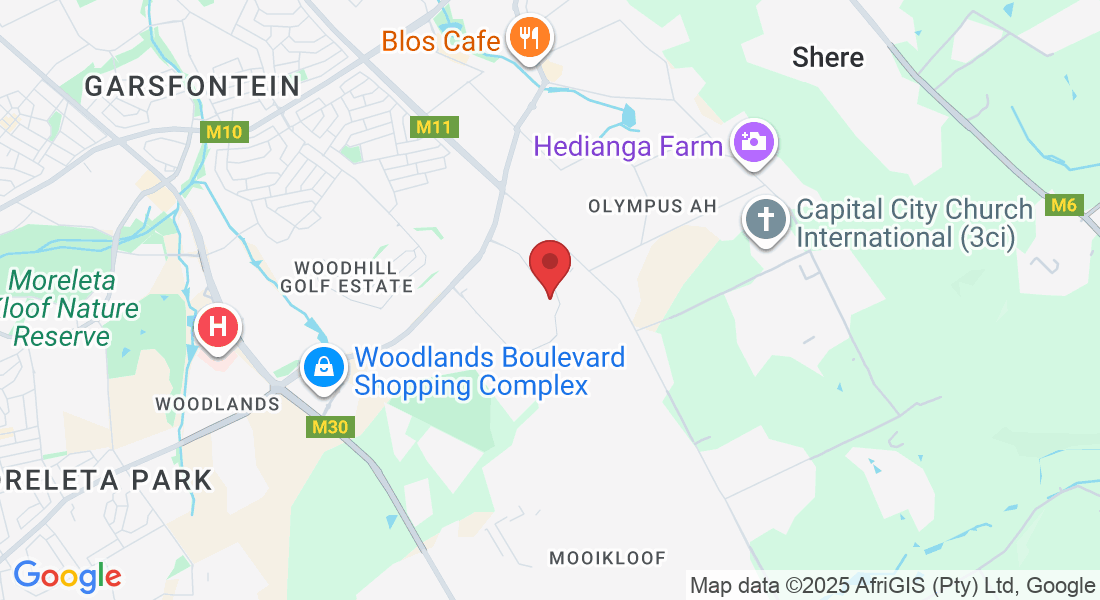
21 Kudu Park, The Wilds , Pretoria Gauteng 0157
Call or WhatsApp Me

Send me a Mail

Availability
Mon-Fri: 8:00 AM - 7:00 PM
Sat: 9:00 AM - 5:00 PM
Get in Touch with us
We’re here to help anytime

Call Us

Mail Us

Opening Time
Mon -Sat: 7:00 - 17:00
Providing trusted medical and health care services with compassionate care, professionalism and precision.
© Copyright 2026 YourBrand Name. All Rights Reserved.